Strait of Hormuz Disruptions Could Reshape Global Oil Markets Well Into 2027
The ongoing disruption to energy flows through the Strait of Hormuz is emerging as one of the most consequential supply-side shocks for global energy markets in recent history. While financial markets continue to react sharply to every headline surrounding U.S.-Iran negotiations, the underlying structural damage to shipping logistics, production timelines, and regional energy infrastructure suggests that even a successful peace agreement may not normalize oil markets quickly.
The Strait of Hormuz handles nearly 20% of global oil consumption and roughly one-third of seaborne crude trade. Any prolonged disruption creates ripple effects across crude pricing, inflation expectations, shipping markets, and geopolitical risk premiums worldwide. Although oil prices may initially decline sharply if a U.S.-Iran peace deal materializes, a sustained bearish trend in crude prices is unlikely unless global supply fundamentals materially improve — a process that increasingly appears delayed until 2027.
Shipping Bottlenecks Remain the Immediate Constraint
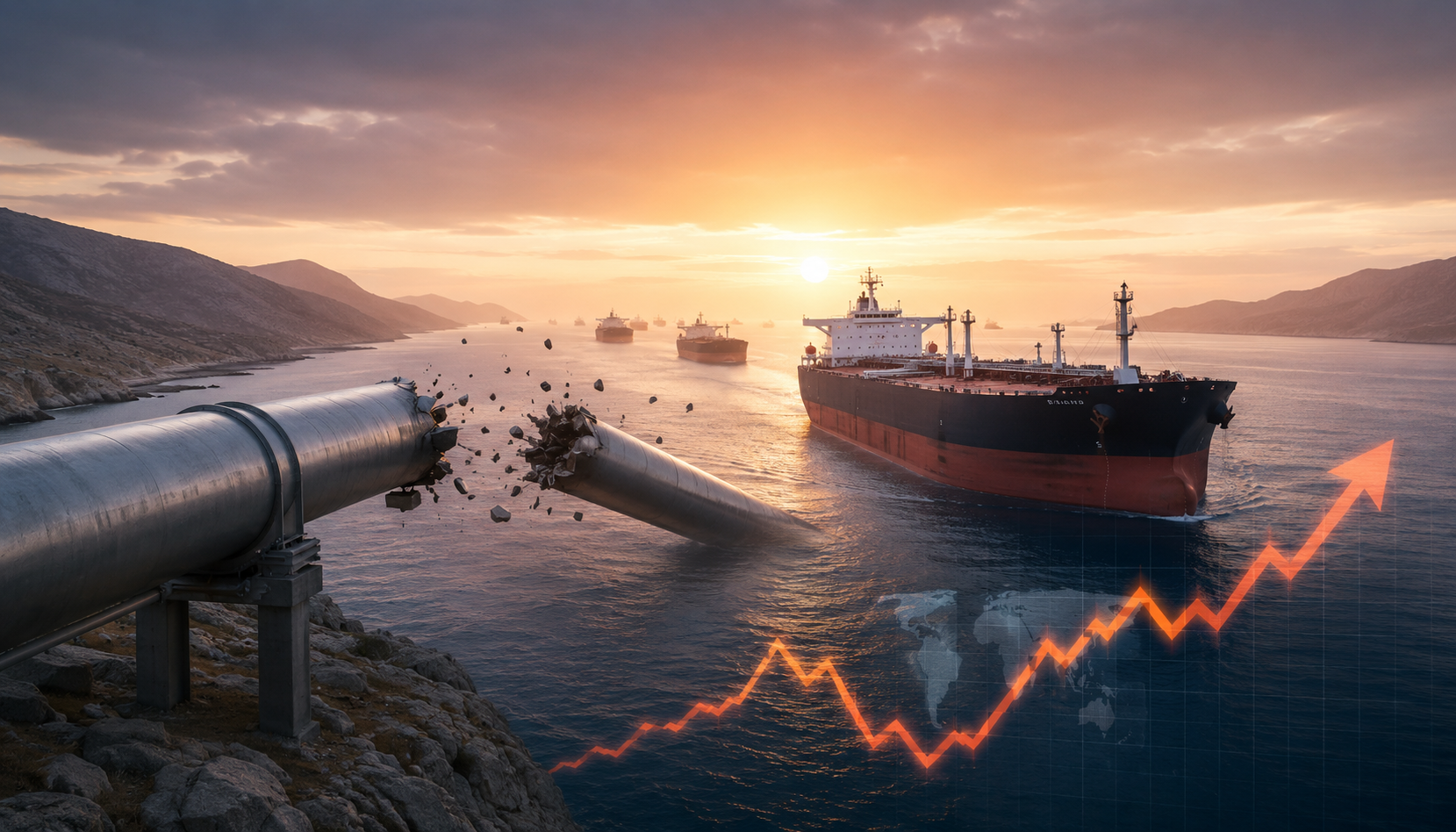
Recent reports indicating that three oil tankers carrying nearly 6 million barrels successfully transited the Strait provide some evidence that the severe congestion in the Persian Gulf is beginning to ease. However, current shipping activity remains significantly below normal operational levels.
The larger challenge lies not in moving outbound cargo already loaded onto vessels, but in restoring inbound tanker availability required to lift crude from storage facilities and restart full-scale exports. Many tankers previously operating in the Gulf have already been redirected toward alternative loading regions such as the U.S. Gulf Coast, West Africa, and the Red Sea. This means shipping capacity cannot instantly return even if geopolitical conditions improve.
The operational complexity is further amplified by multiple risk variables:
- Uncertainty regarding sea mines and maritime safety
- Elevated war-risk insurance premiums
- Questions surrounding Iranian tolls and maritime controls
- Potential vessel maintenance complications after prolonged delays
- Rising freight costs and tanker scarcity
Energy logistics experts increasingly believe that restoring normal shipping rotations could take several weeks at best and several months under a more adverse scenario.
This matters because shipping availability directly determines how quickly Gulf producers can monetize stored crude and normalize export schedules. Even if production facilities are operational, insufficient tanker availability could become the dominant bottleneck for global supply recovery.
Oil Production Recovery Faces Uneven Regional Challenges
Unlike natural gas infrastructure, much of the region’s oil production network appears to have avoided catastrophic structural damage. This distinction is important.
Qatar’s LNG sector has reportedly suffered severe operational setbacks, with approximately 17% of LNG capacity potentially offline for 2–3 years. In contrast, oil facilities in Saudi Arabia and the UAE remain comparatively resilient due to diversified export routes and strategic pipeline infrastructure that partially bypasses the Strait of Hormuz.
Saudi Arabia and the UAE experienced estimated production declines of roughly 30% and 40% respectively between February and April, yet both retained partial export capability. Saudi Aramco’s leadership remains optimistic, suggesting that maximum production capacity could potentially be restored within three weeks following a resolution.
However, the broader regional picture is far less encouraging.
Oil production in Iraq and Kuwait has reportedly slowed dramatically, raising concerns about reservoir pressure loss and long-term field efficiency deterioration. Extended production shutdowns can damage well integrity and reduce future extraction efficiency, especially in mature oil fields.
ADNOC CEO Sultan Al Jaber recently offered a more cautious assessment, stating that:
- Only 80% of pre-conflict energy flows may return within four months
- Full normalization may not occur before late 2026 or early 2027
Such timelines significantly alter the medium-term outlook for global energy balances.
Even if upstream oil fields remain largely intact, downstream refining systems may still contain hidden operational damage. Refineries often face delayed disruptions involving pipelines, storage systems, electricity supply, and maintenance failures that only emerge gradually during restart phases.
This raises the probability of uneven petroleum product exports and intermittent supply shortages across diesel, jet fuel, and gasoline markets globally.
Why Oil Prices Could Fall — And Then Rise Again
The current oil market is effectively pricing two separate forces simultaneously:
1. Geopolitical Risk Premium
This component reflects fears surrounding:
- Strait closure risks
- Military escalation
- Supply disruption
- Maritime insecurity
If a credible U.S.-Iran agreement emerges, this premium could compress rapidly, causing a sharp near-term decline in oil prices.
2. Structural Supply Tightness
This is the more durable and economically important factor.
Even if geopolitical tensions ease, the physical restoration of shipping flows, production capacity, refining utilization, and export logistics may take far longer than markets initially anticipate.
As a result, crude prices may experience an immediate post-deal correction before stabilizing at structurally elevated levels due to persistent supply deficits.
In practical terms, oil prices are unlikely to enter a sustained bearish cycle until:
- Gulf export logistics normalize
- OPEC spare capacity becomes fully accessible
- Refinery throughput recovers
- Global inventories rebuild materially
- Freight markets stabilize
Current trends suggest that these conditions may not fully align before 2027.
Inflation and Central Bank Risks Remain Significant
Persistently elevated oil prices pose major macroeconomic risks globally.
Higher crude prices continue feeding into:
- Transportation costs
- Manufacturing input inflation
- Food prices
- Aviation fuel expenses
- Emerging market trade deficits
For large energy importers such as India, Japan, and much of Europe, sustained crude prices near or above $100 per barrel create renewed pressure on currencies, fiscal balances, and inflation trajectories.
This complicates monetary policy globally.
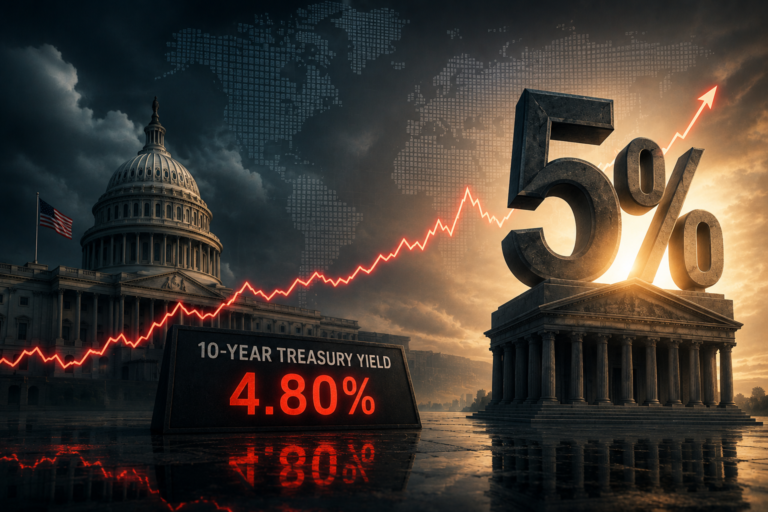
Central banks that had previously prepared for easing cycles may now be forced to maintain higher interest rates for longer periods. The Federal Reserve, European Central Bank, and several Asian central banks are increasingly vulnerable to a second-round inflationary shock if energy prices remain elevated through 2026.
Energy Markets Are Transitioning From a Cyclical Shock to a Structural Crisis
The most important shift occurring in global oil markets is psychological.
Initially, markets viewed the Strait of Hormuz disruption as a temporary geopolitical shock that could reverse quickly through diplomacy. Increasingly, however, institutional investors and energy traders are beginning to recognize the possibility that the crisis could evolve into a prolonged structural supply disruption.
This changes pricing behavior dramatically.
Instead of pricing short-term volatility alone, markets may increasingly price:
- Long-duration supply uncertainty
- Higher strategic inventory demand
- Structural shipping risk
- Permanent geopolitical fragmentation
- Reduced spare production flexibility
That transition could keep oil volatility elevated for years.
Conclusion
The eventual reopening of the Strait of Hormuz will likely trigger a sharp relief rally across global risk assets and an immediate decline in crude oil prices as geopolitical risk premiums compress. However, the physical normalization of global energy flows is shaping up to be a far slower and more complex process.
Shipping dislocations, tanker shortages, insurance constraints, damaged refining systems, and uneven production recovery timelines all point toward a prolonged adjustment period for global oil markets.
The result is a growing probability that crude markets remain structurally tight well into 2027 — even after the military conflict itself subsides.
For investors, policymakers, and energy-importing economies, the key risk is no longer simply whether a peace deal emerges, but whether the global energy system can realistically return to pre-conflict operational efficiency within a reasonable timeframe. Right now, that outcome appears increasingly uncertain.